
Materials
Rice Paper Shadow Box: Materials, Construction and Packaging
Rice paper shadow box wall art is most successful when material expression and practical construction are resolved together. Folding, spacing, backing, frame depth and protective packing all affect how the finished piece is seen and received.
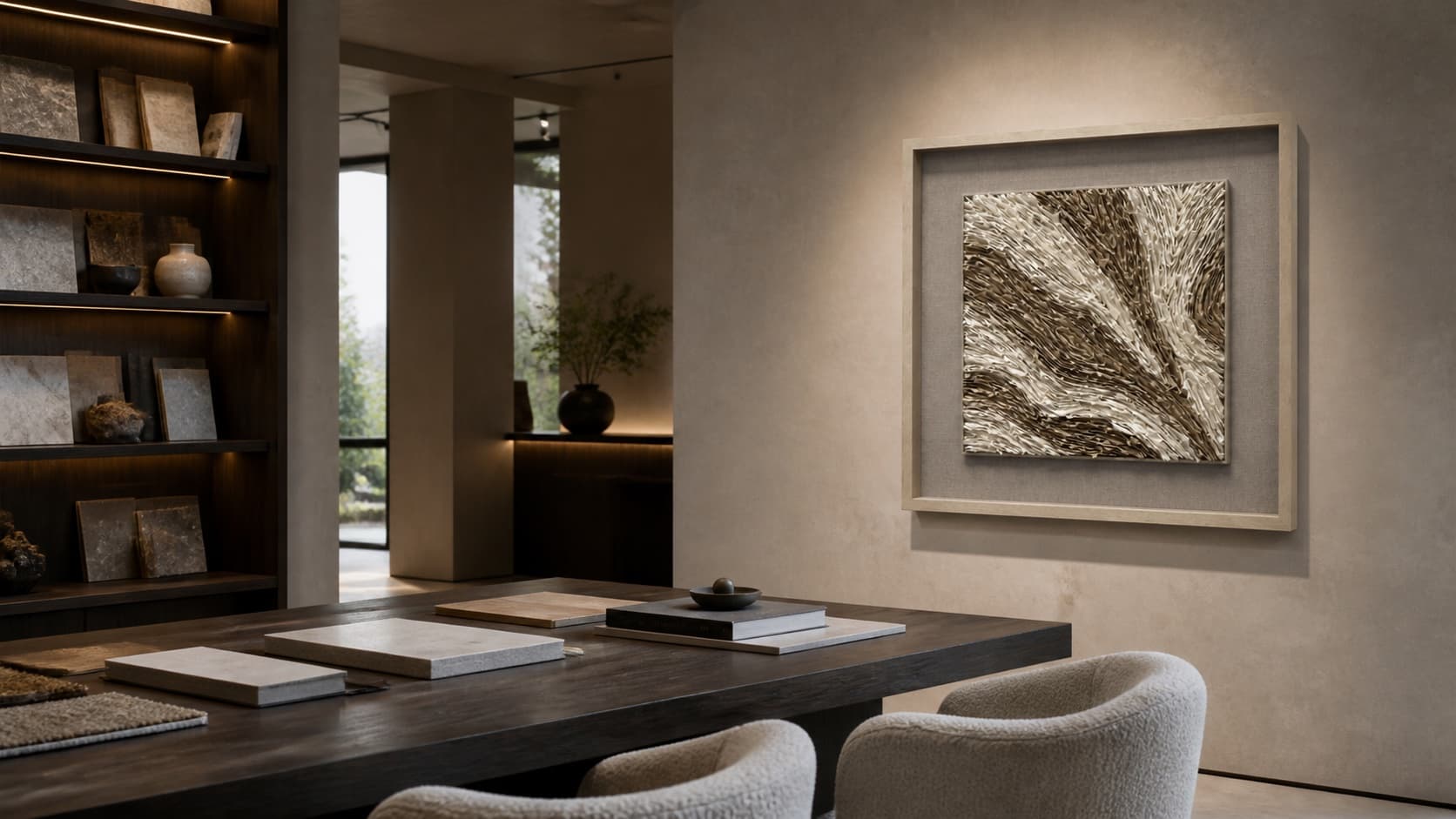
Material expression starts with the paper
Rice paper can be shaped into folds, petals, waves or layered relief. Its visual character is affected by paper weight, color direction, the way it is fixed in place and how light moves across the composition.
The intended design should set a realistic visual range for hand-shaped elements, rather than requiring every detail to appear mechanically identical.
Frame depth supports the relief
The backing, spacer and frame need to provide sufficient depth for the paper composition without compressing the intended form. Frame finish and glazing choices should be assessed with the artwork, since they change how the relief reads at viewing distance.
A physical sample is the practical point to confirm the full relationship between material, construction and presentation.
Packaging protects the finished composition
The packaging direction should reflect the final frame, relief depth and delicate surface areas. Confirm how the piece will be received, stored and handled so protective materials and labeling support the buyer's workflow.
Discuss packaging before final approval, particularly when the rice paper construction includes pronounced relief or other delicate features.
- Paper form and acceptable variation
- Backing, spacing and frame depth
- Glazing and finished presentation
- Protective export packing and labeling