
Buyer guide
Shadow Box vs. Canvas Wall Art for Retail Collections
Shadow box and canvas wall art can sit together in a collection, but they create different product experiences. The right choice depends on the intended customer, price direction, display setting and level of dimensional detail.
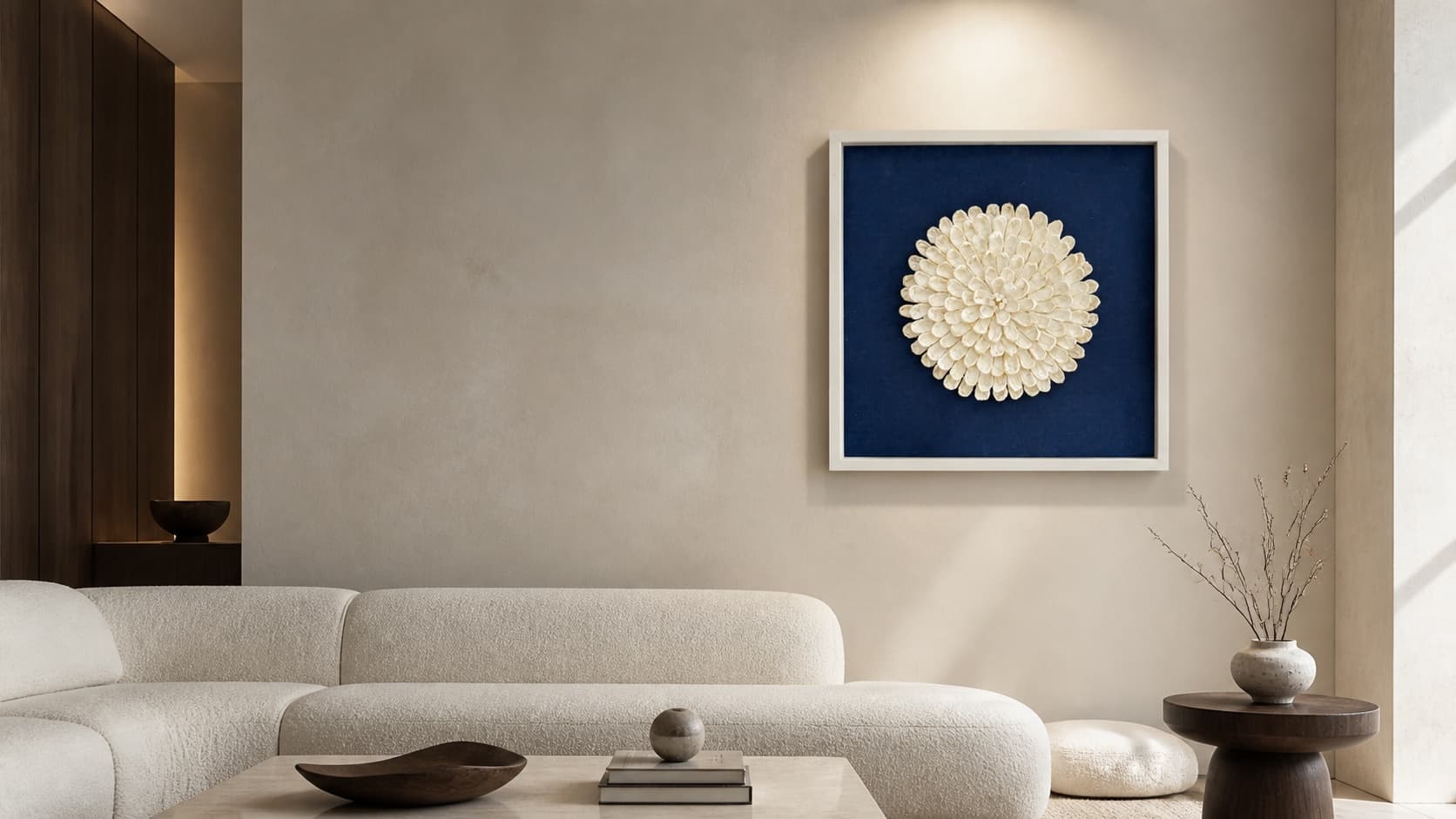
Shadow boxes lead with depth and material
A shadow box wall art direction creates visual depth through layered paper, botanical elements, shell or other mixed-media components within a frame. It can act as a tactile focal piece in a collection where material expression and relief are important.
The brief should account for the depth of the composition, frame profile and how each material is protected in handling and export packing.
Canvas leads with artwork and surface
Canvas wall art is often a flexible choice when the collection needs coordinated artwork, scale and surface treatment across multiple formats. The visual impact comes from the artwork, palette, texture and framing rather than a deep, layered construction.
It can be an effective counterpart to shadow box designs when a range needs a balance of statement pieces and broader repeatable formats.
Choose the role before choosing the material
Start with the target customer, intended price direction, display context and desired visual impact. Then review construction, size, frame and packaging as a complete product rather than comparing materials in isolation.
A physical sample gives buyers a clearer way to assess the finished effect and decide which platform supports the collection.
- Target customer and channel
- Desired depth and texture
- Format and frame direction
- Sampling and export packing needs