
Materials
Choosing materials for dimensional wall art
Material is not a decorative afterthought. It sets the visual depth, texture, tonal range and construction decisions that need to be resolved before a wall art direction moves into production.
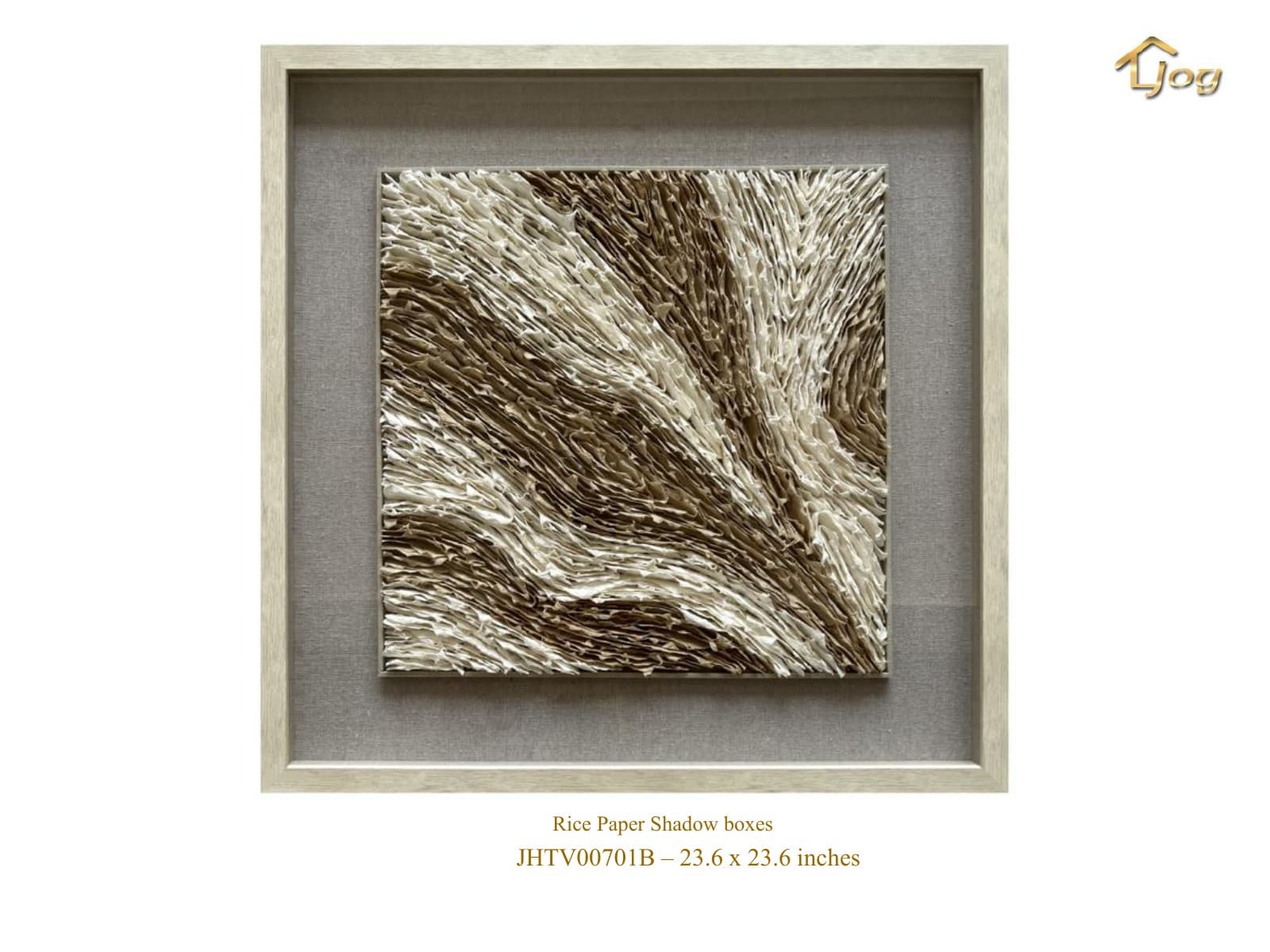
Choose the material for the desired expression
Rice paper can create folded and layered relief; shell introduces natural tonal variation and reflective detail; agate and stone-inspired elements can act as a focal point. Textile and other mixed media bring a softer or more tactile surface language.
The right choice begins with the intended mood and level of variation—not with a material list alone.
Resolve variation through the sample
Natural and hand-shaped materials do not read exactly the same from piece to piece. A physical sample helps establish the accepted visual range, composition, spacing and finish for the collection.
That agreed reference gives production and quality checks a clear standard to work toward.
Specify the full composition
Material should be considered together with backing, frame depth, frame finish, scale and packaging. A strong material direction can lose impact when those surrounding decisions are not coordinated.
Describe the complete product in the brief, then use the sample to test it as one object.